
How to track repeat customers for trade businesses
Repeat customers are some of the most valuable people on your books, but only if you know who they are. This guide breaks down the best ways to track repeat customers, from simple spreadsheets to trade-specific CRMs, plus how to turn that data into more bookings, reviews, and referrals.
· 14 min read
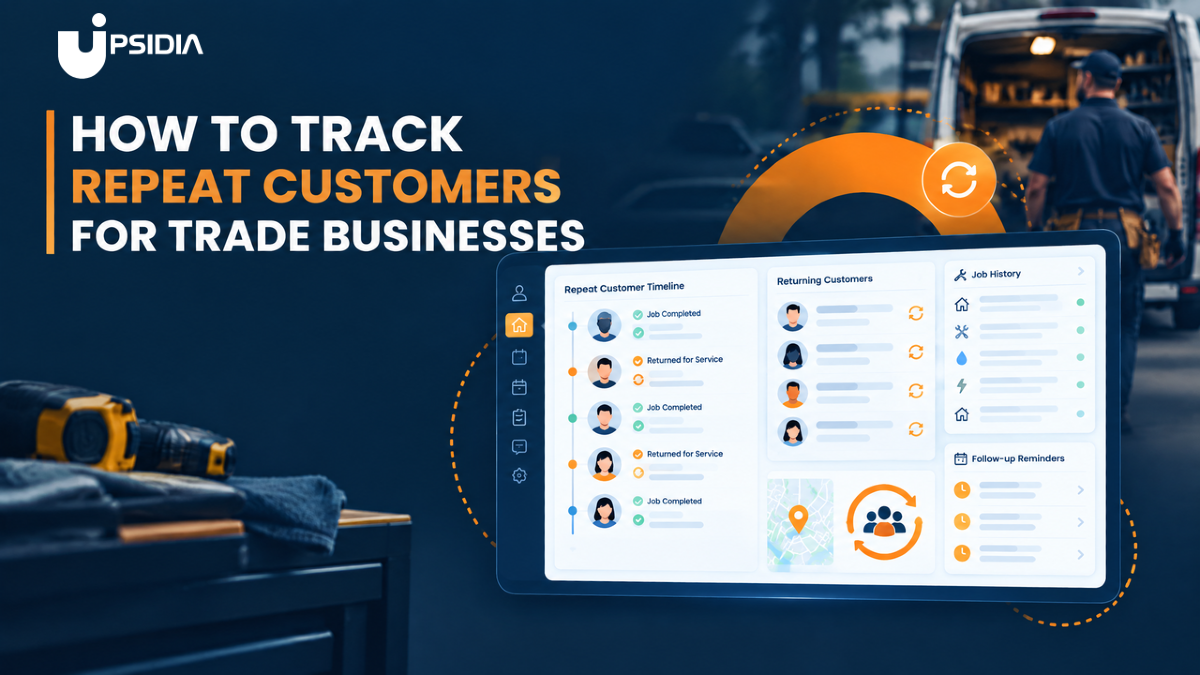
It's the dream of every trade business owner to have a steady inflow of new customers. But getting new customers isn’t the only way to keep your business busy. Some of your most valuable opportunities may already be on your customer list.
Research by Bain & Company found that acquiring a new customer is 5 to 25 times more expensive than retaining an existing one. For a tradesperson, that makes the customer you already worked with worth paying attention to. They already know your business, have experienced your services, and may need your help again.
So, how do you track these customers? This article looks at who repeat customers are, why tracking them matters to a trade business, how to track them effectively, and how to use that information to encourage repeat business. We will also look at some common mistakes that trade business owners make when tracking repeat customers.
Who are repeat customers?
A repeat customer is someone who hires your business again after you have completed an earlier job for them. The second job doesn’t have to be the same as the first one. What matters is that they choose your business again instead of finding another tradesperson.
For example, an electrician installs new sockets in a homeowner’s kitchen. A year later, the homeowner contacts them to install an EV charger. Although the job is different, the homeowner is still a repeat customer because they returned to the same business.
Repeat customers can come back because they were happy with your previous work, need a service you provide regularly, or simply prefer to use a tradesperson they already know and trust. They can also become a source of referrals, making existing customer relationships valuable beyond the jobs they book themselves.
Why tracking repeat customers matters to trade businesses
Repeat customers are the silent heroes of every successful trade business. Think of them like the regulars to a local diner. They know the business, trust the services and keep coming back.
The problem is that regulars don't announce themselves. Without a system to track, you are relying on your memory, and the truth is that you can forget as you try to manage your day-to-day activities.
Here are some reasons why you have to track them:
Repeat customers cost far less to win than new ones
Winning new customers usually involves spending time and money to attract their attention, answering their enquiry, providing quotes to jobs you may not win, and convincing them to choose your business. With existing customers, that whole process is skipped.
You already have their contact details and job history, and they, on the other hand, already know what it is like to work with you.
Tracking that information makes it easier to follow up with customers you have already worked with before and create opportunities for more jobs.
Repeat customers tend to spend more over time
A repeat customer may start with a small job but become more valuable to your business as they return for additional work.
A homeowner might first hire you to fix a leaking tap, then come back for a bathroom renovation or another repair months later.
Tracking their previous jobs helps you see this relationship over time. Instead of viewing each booking as a separate transaction, you can see the customer’s overall history with your business and the value they have brought over multiple jobs.
Referrals come more from repeat customers
A customer who has used your service more than once has multiple opportunities to experience your work. If they are happy with the service, they may be more comfortable recommending it to friends, family, neighbours, or colleagues.
Tracking repeat customers can help you identify the people who have already established relationships with your business. You can continue providing a good experience and make it easy for satisfied customers to recommend your services.
Improves follow-up
When there is a record of all your previously completed jobs, it's easier to follow up with customers at the right time. You can see what services they previously booked, when they were completed, and whether they may need it again.
For example, if you fitted a boiler for a customer last year, their job history gives you a reason to check in about servicing or maintenance rather than sending a generic follow-up message.
Ways to track repeat customers
There are various ways to track repeat customers, from using a simple spreadsheet to dedicated software that keeps customer and job information in one place.
The right option depends on the size of your business, the number of customers you handle, and how much detail you need to keep.
Here are ways you can track repeat customers:
Using a simple spreadsheet
As a sole trader or a business with a small, manageable customer list, a spreadsheet can be a decent starting point. A simple spreadsheet with columns for customer name, contact details, job type, job date, and amount charged gives you somewhere to look when you need to check "When did I last do work for this customer?”
Using a spreadsheet costs nothing, takes minutes to set up, and for a small business, it helps get the job done. There is no learning curve, no software to install, and no monthly fee to use a spreadsheet.
The downside to using a spreadsheet is that there are:
No automatic reminders when a customer is due for follow-up
No link between the customer record and the actual quote or invoice
Everything relies on someone remembering to manually update the record after every stage is complete
There's no way to flag your highest-value or most frequent customer at a glance
A spreadsheet is a reasonable starting point, but most trade businesses outgrow it faster than they expect.
Using a trade directory profile
If you are listed on Upsidia, Checktrade, MyBuilder, or Rated People, your profile already holds some customary history: past reviews, job types, and sometimes contact details for people who found you through the platform. For a lot of tradespeople, this is the closest thing to a customer record they have.
The problem is that a directory wasn’t built to help you track repeat customers. It was built to help new customers find you. There’s no way to search “who have I worked for more than once?” or flag a customer who is due for a follow-up.
The downside of relying on a trade directory profile is:
You can only see customers that have contacted you through that platform, not the ones that called you directly or found you through word of mouth
There’s no way to log job details, notes, or a next follow-up date against a customer
If you are on more than one directory platform, your customer history is split across separate platforms with no way of bringing them together.
You don’t own your data; if you leave the platform or your account gets suspended, that history goes with it
A directory profile is useful for winning new work and building trust through reviews. But it was never designed to be your customer record, and treating it as one means most of your repeat customers can slip through with your notice.
Using a job/booking management tool with customer history
Booking and scheduling tools made specifically for trade businesses (the kind that handles diary management, job status, and callouts) often come with a customer record built in them. Every time you book a job, it sits against that customer’s profile, so you can see at a glance who is booked in, who a repeat customer is, and when they were last on the job list.
This is a step up from a spreadsheet or a directory because the job data updates itself as you work. Book a job, mark it as done, and the history is already there.
The catch is that these tools are usually built around the job, not the full customer relationship. That can mean:
Customer notes are limited to what’s relevant for scheduling (address, access details) rather than the bigger picture (job value over time, communication preference)
No built-in way to flag a customer as “due for a follow” once a job is marked as done
History is often visible per job, not summarised per customer, so spotting your best repeat customers still takes the manual digging
Customer history is split across different tools; the booking tool shows jobs, but quotes, invoices, and past communication are usually in separate platforms, so there is no single view of the full relationship
A job or booking tool solves the problem of “what happened and when did it happen” very well. But if you want to actually act on that history with follow-up, personalised offers, or spot your best customer, you need something built around the customer, not just the diary.
Using a dedicated CRM software
A CRM (Customer Relationship Management) software is built around the customer relationship itself, contact details, communication history, notes, and follow-up dates, all kept in one place. Unlike a spreadsheet, it does some of the remembering for you: set a follow-up date once, and the system flags it when it’s due, rather than relying on memory or a diary note buried under the week’s job.
The structure of a CRM tool gives it an advantage over a spreadsheet or a directory profile. Without having to manually scroll through rows or profiles, you can search, filter, and segment customers to find out who hasn’t been in touch in a while or who your most frequent customer is.
The disadvantage is that a standalone CRM usually stops at the relationship. It doesn’t handle the rest of the job. That means:
No built-in quoting, invoicing, or job scheduling, so those are still in separate tools
Customer spendings and job value have to be manually entered rather than pulled through from the invoice
A monthly cost on top of whatever you are already paying for quoting and invoicing software.
Since most CRMs were created for sales processes (lead - contacted - proposal sent - negotiation - deal won) and not trade business processes (enquiry - quote - job booked - job completed - invoice paid - follow-up date), there are a lot of features that you cannot use.
A CRM solves the "Who is this customer, and when did I last speak to them?” problem. But on its own, it is still one piece of the picture since the job and money side of your business are in separate places.
Which one actually works best?
Every option has a catch with it. A spreadsheet, forget; a directory isn’t yours to keep; a booking or job tool only tells part of the story; and a standalone CRM tool wasn’t built with a trade business in mind.
An all-in-one platform built specifically for trade business solves everything once, from quoting, invoicing, and job scheduling to customer tracking, all in one system rather than a CRM integrated with separate tools.
A platform like Upsidia was built to do exactly that.
How to turn tracked data into repeat business
Tracking customers’ data is only useful when you actually do something with it. A spreadsheet, CRM, or booking tool full of customer history that never gets acted on is no better than no tracking at all. The value is in what you do with what you know.
Timely follow-up
Trade work goes on in a never-ending cycle; boilers need annual servicing, gutters need regular clearing, and gardens need seasonal upkeep. Tracked job dates let you follow up right on schedule, instead of waiting for the customer to remember and call you.
Personalised offers based on job history
A generic “get in touch” message rarely ever gets a response, but a message built around what you already know about a customer usually does.
Job history tells you what a customer might be ready for next. A landlord with three properties might need a seasonal gas safety check across all of them, not just one.
So instead of sending a message saying “book now”, you could send a message saying, “Hi Dave, a few of your gas safety certificates are coming up for renewal. Want me to book all three properties together so it’s one less thing to think about?”
Prioritise your highest-value repeat customers
Not every repeat customer is worth the same to your business. Tracked job frequency and revenue generated reveal who is actually driving the most value over time, and that’s who deserves first-in-line scheduling, priority booking slots, or a small loyalty discount.
Re-engage customers that have gone quiet
Tracked data doesn’t just show who is active. It also shows who stopped booking. A customer who used to rebook every 6 months but hasn’t booked for over a year is a signal worth acting on, not ignoring.
A simple, low-pressure check-in message like “Hi Nathan, it’s been a while since we last worked on your boiler. Is everything still running smoothly with the boiler?” is enough and costs nothing to send.
Asking for reviews from repeat businesses
A customer who has used your service more than twice is a person who already trusts the kind of service you render and is usually the best person to give a genuine review for your trade business.
By the second or third job, they have seen enough consistency to review your business with confidence, not just “the work was fine” but the “I have used them three times, and they have never let me down” kind of confidence. That kind of review carries far more weight than a first impression, because it comes from someone who has had time to actually test your business.
Turn repeat customers into referral sources
The customers most likely to refer you aren’t your newest customers but the ones that have used your services several times and have never had a reason to look back.
Tracking this information shows you exactly who these people are, so you know who is worth asking.
A referral request works best when it’s personal, not a blanket request sent to your whole list. Something like "Do you know anyone who needs this kind of work done?” directed to customers who know your business well will land as a natural request because they already have a reason to vouch for you.
Common mistakes to avoid when tracking repeat customers
Even when a system is in place, it is easy to track customers in a way that doesn’t help. Here are some mistakes to avoid:
Keeping customer information in different places. Having job notes in one app, quotes in email threads, invoices in accounting software, and contact details in a phone will have you moving between multiple platforms when a customer calls.
Treating every enquiry as a new customer. Without checking if someone has booked your service before will make you miss the opportunity to reference previous job history, personalise the follow-up, or spot that they are actually a repeat customer worth prioritising.
Only tracking revenue. A customer who books small jobs often can be worth more long-term than a single big-ticket job with no repeat pattern.
Not recording previous jobs. Without a job history, you can’t answer "When did I last do work for this customer?” or spot when they are due for a follow-up.
Forgetting the last contact date. Without a last contact date, there is no way to flag who has gone quiet or is overdue for an outreach, so re-engagement opportunities slip by without your notice.
Tracking numbers without acting on them. Data sitting untouched in a spreadsheet or CRM is no better than not tracking at all. The value is in following up, not just logging them.
Conclusion
Repeat customers are already on your side. They already trust your work, cost far less to win than a new lead, and are your best source of referrals and reviews. But none of that will happen automatically without a system to track who they are, when they last booked, and when they are due to come back; even your most loyal customers can quietly slip through the cracks you leave.
The good news is that you don’t need a complicated setup to get this right. Whether you are just starting with a spreadsheet or ready to move to something built specifically for trade businesses, the goal is the same: know your customers well enough to be there before they even think to call someone else.
Every repeat customer you lose is one your competitor picks up. Sign up for free to start building repeat customers with Upsidia today.
Frequently asked questions
What is the easiest way to track a repeat customer as a sole trader?
A simple spreadsheet is usually enough to start, just a few columns for customer name, contact details, job dates, and job value. It costs nothing and takes minutes to set up. As your customer list grows, you'll likely outgrow it, but it's a reasonable starting point when you're managing everything yourself.
Do I need a CRM if I only have a few regular customers?
Not necessarily. If you can comfortably remember or check a spreadsheet for who's due a follow-up, a CRM may be more than you need right now. It becomes worth considering once manual tracking starts costing you missed follow-ups or lost repeat work, usually as your customer base grows past what you can keep in your head.
What customer information should a small business track?
At minimum: job history and dates, contact details, communication preferences, job value and frequency, and the date of your last contact with them. Together, this gives you enough to know who's a repeat customer, who's overdue for a follow-up, and who's worth prioritising.
What is the difference between customer retention and repeat customers?
Repeat customers are the people who've booked you more than once. Customer retention is the broader measure of how well you keep customers coming back over time, usually tracked as a percentage of your customer base that rebooks within a given period. Repeat customers are the evidence; retention is the trend.
How often should I measure repeat customers?
Monthly or quarterly works for most trade businesses, and it is frequent enough to catch drop-off early, without it becoming a chore. Seasonal trades (like gardening or gutter clearing) may find it more useful to review before and after their busy season, when patterns are easiest to spot.
Want more customers without doing the marketing yourself?
Tell us about your business and we will show you what is holding it back online. No obligation.
Contact us →One useful marketing idea for your trade, straight to your inbox
No spam, no selling your data. Unsubscribe with one click.
Related articles
Best cleaning software for cleaning companies
Choosing the right software can be the difference between a cleaning business that runs itself and one that is always trying to catch. Here's how to compare tools, including Upsidia, Jobber, ZenMaid, Housecall Pro, ServiceM8, mHelpDesk, and Tradify, and pick the one that actually fits how you work.
· 13 min read
Best CRM tools for local businesses
Compare the best CRM tools for local businesses and tradespeople, including their features, pricing, and what to look for when choosing the right CRM.
· 14 min read

9 Ways to Get More Reviews as a Tradeperson
Want more customer reviews for your trade business? Discover 9 practical ways to encourage reviews, from asking at the right time to using review management software.
· 10 min read