
Booking software vs. Pen-and-Paper Scheduling: The Real Cost of Staying Manual
Pen-and-paper scheduling might feel free, but double bookings, missed reminders, and slow response times can quietly cost small trade businesses time, trust, and jobs. This article breaks down the real cost of staying manual and what actually changes when you switch to booking software.
· 7 min read
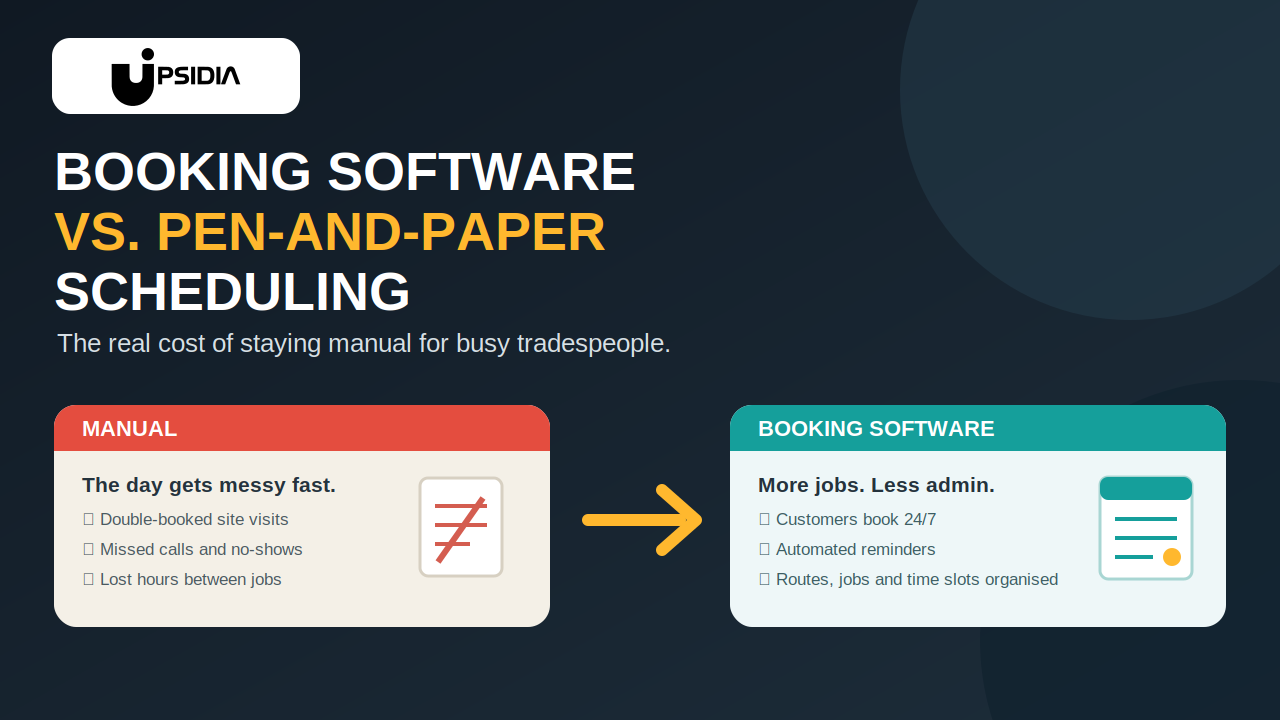
Managing bookings is part of running a trade business, but the way you manage them can have a bigger impact than you might expect. Many small trade businesses still book in a notebook, diary, or quick note on the phone.
While these methods may seem simple, familiar and cost nothing extra, they can become something else as the business grows. More customers start coming in.
Booking software offers a way to take much of this administrative task off your hands. But is it really worth using for a small trade business, or is pen and paper still enough?
Let’s look at the real cost of staying manual and what it changes when you switch to booking software.
Why small businesses stick with manual scheduling
For a small trade business, manual scheduling can feel like the most practical option. When there are only a few customers to manage, writing appointments in a diary or keeping track of customers on a phone may seem perfect.
There’s also no software to set up, no subscription to think about and no new system to learn. You can simply write down a customer’s name, job and appointment time and get on with the work
The problem usually starts when the business gets busier. Getting more customers, more enquiries and more changes to appointments can make a simple system harder to keep track of. What once took a few minutes can gradually turn into a regular administrative task.
The hidden cost of manual booking
Manual scheduling may not appear on your business expenses, but that doesn't mean that it is free. The real cost can show in the time you spend managing bookings, the mistakes that happen along the way and the jobs you may lose because of them.
For a busy trade business, even small scheduling problems can quickly add up. Here are some of the highest hidden costs to consider.
a. Double booking and scheduling errors
As a tradesman, calls can come in when you are very busy: up a ladder, down a sink, or halfway through a job with your hands very full. In that moment, a booking can be scribbled on whatever is nearest to you or held in your head “to write down later”. Later doesn’t always happen, and two customers end up being booked in the same time slot.
When this becomes a consistent occurrence, you don’t just lose time but also lose the trust your customers have in your business.
b. Missed reminders
With manual scheduling, remembering the appointment is often only half the job. You may also need to remember to remind each customer about their upcoming booking.
When you are busy completing other jobs, travelling between locations, or responding to new enquiries, sending those reminders can easily slip through your mind. Customers can then forget their appointment or arrive at the wrong time, creating unnecessary gaps in your schedule and more administrative work for you.
c. Time spent on administrative tasks
Manual booking isn’t just writing down bookings manually; it is constantly ringing to confirm and remind customers about upcoming jobs, transferring notes from a paper diary to a phone calendar, and cross-checking availability before agreeing to a new job.
A recent survey of UK tradespeople found that electricians, plumbers, and builders lose an average of 8 hours a week to repetitive administrative tasks, which is equivalent to ten full working weeks in a year, and scheduling is part of that administrative task.
These small tasks eat away the time that could have been spent doing or completing the actual job, following up with customers or taking on new work.
d. Lost jobs from slow response time
When a potential customer gets in touch with you, they may be contacting more than one business. If you need to check a notebook, work out your availability, and get in touch with them later, you are most likely to lose that job because they will find someone else while you are trying to sort your schedule.
This is especially important for small trade businesses where every new job matters. A slow response time doesn’t always mean you lose the customer, but it can make it harder to turn enquiries into bookings.
What switching to booking software actually changes
Once scheduling moves off paper and into a proper booking system, most of the daily friction disappears, not because the work changes but because the administrative task around it does. Here's what that actually looks like in practice.
a. No more double bookings
Booking software works from one calendar, which gets updated the moment a job is confirmed for a particular time slot, whether it is booked by someone on your team or the customer themselves online. The software helps you to no longer rely on handwritten notes or scattered messages because all your appointments are organised in your calendar.
You can see what has already been booked and when you are available before confirming a new appointment. This makes it easier to avoid scheduling two customers for the same time and reduces the risk of mistakes when appointments are added or changed.
b. Automated reminders of schedules
Once a job is booked, the reminder sends itself; no one has to remember to make the call. Customers get a text or email ahead of the appointment.
This means that customers are less likely to forget their appointments, while you spend less time sending individual messages or making reminder calls. It also keeps your schedule moving without adding another task to your day.
c. More time spent on things that generate revenue
The less time you spend managing bookings, the more time you can focus on the work that directly brings money into your business. Booking software can reduce the need to manually check your diary, update appointments, send reminders, and respond to routine booking requests.
This gives you more time to complete jobs, follow up with customers, respond to enquiries, and take on more work.
d. Faster response to enquiries
With online booking, a customer doesn't have to wait for a response from you to get a slot. They can see live availability and book it themselves, any time of the day.
This means you can capture bookings even when you are busy working, travelling between job locations, or outside your normal working hours. It also reduces the back-and-forth involved in finding a suitable time, making it easy for potential customers to go from an enquiry to a confirmed booking.
Is booking software worth it for a small trade business?
Booking software can be useful even if you run a small trade business and only have a handful of bookings at a time. The value isn’t necessarily in how many bookings you have, but in how much time and effort you spend managing them.
If you are regularly checking your diary, responding to booking enquiries, sending reminders, or dealing with schedule changes, a booking system can help take away some of the work from your hands.
It can be especially useful if you:
Have regular customers
Receive booking enquiries outside your working hours
Need to manage several jobs in a day
Have a team member who needs access to schedules
Spend a lot of time confirming or changing appointments
Want to make it easier for customers to book without waiting for a response
For a small business, saving time on these tasks can mean more time available for completing jobs and serving customers.
Conclusion
Manual booking might feel free, but between missed reminders, double bookings, slow response times, and time lost to administrative tasks every week, it is rarely as cost-free as it looks. Booking software doesn’t just organise your schedule; it gives you back the time and jobs that manual booking was quietly costing you.
Whether you are a one-man trader having to shuffle a lot of jobs at a time or a growing team managing a full calendar, the right booking system can make scheduling easier. It can help you manage booking conflicts, reduce repetitive administrative tasks, and give customers a quicker way to book your services.
The goal isn’t to use software simply because it's available, but to spend more time doing the work that keeps your business moving and less time managing the schedule.
If you're ready to stop losing time to the diary, check out how Upsidia can help take the bookings off your hands and give you more time to do more work.
Want more customers without doing the marketing yourself?
Tell us about your business and we will show you what is holding it back online. No obligation.
Contact us →One useful marketing idea for your trade, straight to your inbox
No spam, no selling your data. Unsubscribe with one click.
Related articles

Best cleaning software for cleaning companies
Choosing the right software can be the difference between a cleaning business that runs itself and one that is always trying to catch. Here's how to compare tools, including Upsidia, Jobber, ZenMaid, Housecall Pro, ServiceM8, mHelpDesk, and Tradify, and pick the one that actually fits how you work.
· 13 min read

How to track repeat customers for trade businesses
Repeat customers are some of the most valuable people on your books, but only if you know who they are. This guide breaks down the best ways to track repeat customers, from simple spreadsheets to trade-specific CRMs, plus how to turn that data into more bookings, reviews, and referrals.
· 14 min read

Best CRM tools for local businesses
Compare the best CRM tools for local businesses and tradespeople, including their features, pricing, and what to look for when choosing the right CRM.
· 14 min read